Product Management Week 1
Introduction
Navigating into the world of product management with Nextleap cohort. This week's learning was all about system thinking and how Systems Thinking and how to utilize it in the work to help the products succeed in achieving it's goals without causing negative impacts in the wider world & Mapping Business Outcomes and Product Outcomes where I learned about how It involves aligning the goals and objectives of the overall business with the specific results that the product is expected to deliver.
Diving deep into systems thinking
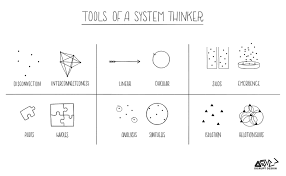
Systems thinking is a valuable approach in product management, as it allows product managers to understand and address the complexity of the overall system in which their product operates. Product Managers need to understand and utilize systems thinking in their work to help the products achieve its goals without causing negative impacts in the wider world.
Systems thinking beyond linear, cause-effect thinking. It involves a deep understanding of the correlation between components in a product and how it all works together.
Why to follow systems design thinking?
Holistic Understanding:
- Systems Design Thinking encourages a holistic view, compelling us to consider the broader context and interconnectedness of components. By understanding the entire system, we can create solutions that address root causes rather than just symptoms.
Effective Problem-Solving:
- This approach facilitates effective problem-solving by emphasizing the relationships and dependencies between elements. By identifying and addressing the underlying issues, solutions become more robust, sustainable, and aligned with the overall goals.
User-Centric Solutions:
- Systems Design Thinking places the user experience at its core. By considering the entire journey and interactions within a system, we can design solutions that genuinely meet the needs and expectations of users, leading to higher satisfaction and engagement.
Long-Term Value Creation:
- Designing with a systems perspective means considering the long-term impact of our decisions. This approach enables us to create solutions that not only address immediate needs but also contribute to sustained value creation over time.
Data-Driven Decision Making:
- With a focus on feedback loops and continuous learning, Systems Design Thinking encourages a data-driven approach. By incorporating real-time data and insights, we can make informed decisions that lead to more successful outcomes.
Diving deep into business outcomes and product outcomes
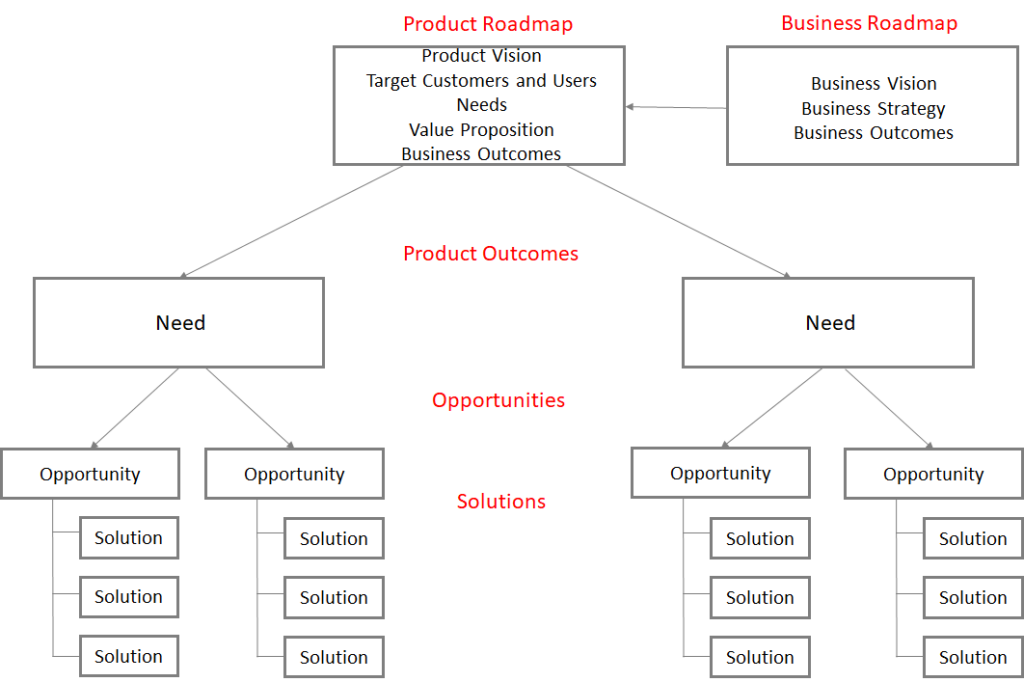
Mapping business outcomes to product outcomes is a crucial aspect of effective product management. It involves aligning the goals and objectives of the overall business with the specific results that the product is expected to deliver. When a product team aims at achieving product outcomes, it places customers’ and users’ needs, wishes, desires, and pain points at the heart of any effort. And it meets only those customers’ and users’ needs which contribute to business outcomes. By using this approach, the team can ensure delivering value to both the target group of people and the company.
How to map business outcomes to product outcomes?
Understand Business Objectives:
- Begin by gaining a deep understanding of the broader business objectives and goals. This may include revenue targets, market share growth, customer satisfaction improvement, or other key performance indicators (KPIs).
Identify Key Performance Indicators (KPIs):
- KPIs that are critical to measuring the success of the business. These could include financial metrics, customer satisfaction scores, user engagement, or other relevant indicators.
Align Product Goals:
- Based on the identified business objectives and KPIs, establish clear and measurable product goals. These goals should directly contribute to achieving the desired business outcomes.
Define Product Outcomes:
- Break down the product goals into specific product outcomes. Product outcomes are the tangible results or changes that the product is expected to deliver. These could include new features, improved user experiences, increased user adoption, or other measurable changes, video completion rate.
Quantify Metrics:
- Quantify the metrics associated with both business outcomes and product outcomes. Establish clear benchmarks and targets for success. This helps in tracking progress and evaluating the effectiveness of the product in contributing to overall business success.
Prioritize Features and Enhancements:
- Prioritize product features and enhancements based on their potential impact on achieving the desired business outcomes. Focus on delivering the most impactful features that align with both short-term and long-term business goals.
Iterative Feedback Loop:
- Regularly review progress, share insights, and adjust strategies as needed. This ensures that the product remains aligned with evolving business priorities.
I hope you enjoyed reading this content. Next week is all about Mapping Outcomes to Opportunities & User Research.
